Primary Device
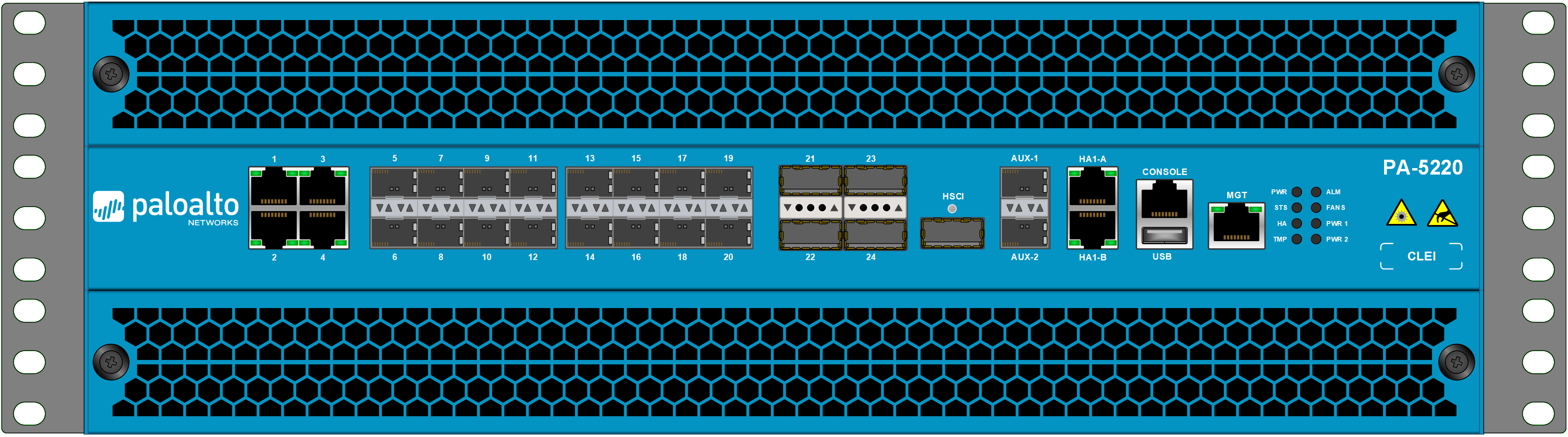
Palo Alto Networks PA-7500
★ 3.4 Value Score
Technical Specifications
- Category: Firewall
- Firewall Throughput: 100 Gbps
- Threat Prevention Throughput: 60 Gbps
- IPsec VPN Throughput: 40 Gbps
- Max Sessions: 200 million
- New Sessions/sec: 1 million
- Interfaces: Modular (up to 12u00d7 40GbE ports or equivalent 10GbE/1GbE)
- Form Factor: 6-slot modular chassis, rack-mounted (19-inch)
- Power Consumption: ~3000W
- Redundancy: Dual power supplies, active-active or active-passive HA
Curation Review
- ✔ Pros: Extreme throughput and performance for large-scale enterprise networks; Modular architecture allows flexible port configurations and future expansion; Advanced multi-layer threat prevention with AI-driven security features; Exceptional session handling capacity suitable for service providers; Comprehensive security ecosystem with integrated threat intelligence and compliance support; Native support for high-speed redundancy and active-active clustering
- ✘ Cons: Prohibitively expensive capital investment with licensing costs adding $20k-50k+ annually; Steep learning curve requiring specialized Palo Alto expertise to configure and manage effectively; Very high power consumption (~3000W) and cooling demands limit deployment flexibility; Large physical footprint and weight require dedicated rack space and infrastructure planning; Complex license entitlements and subscription model can be confusing; Limited justification for most mid-market organizations; vendor lock-in due to proprietary features and licensing structure
- Est. Price: $85,000 - $150,000
Compare Against
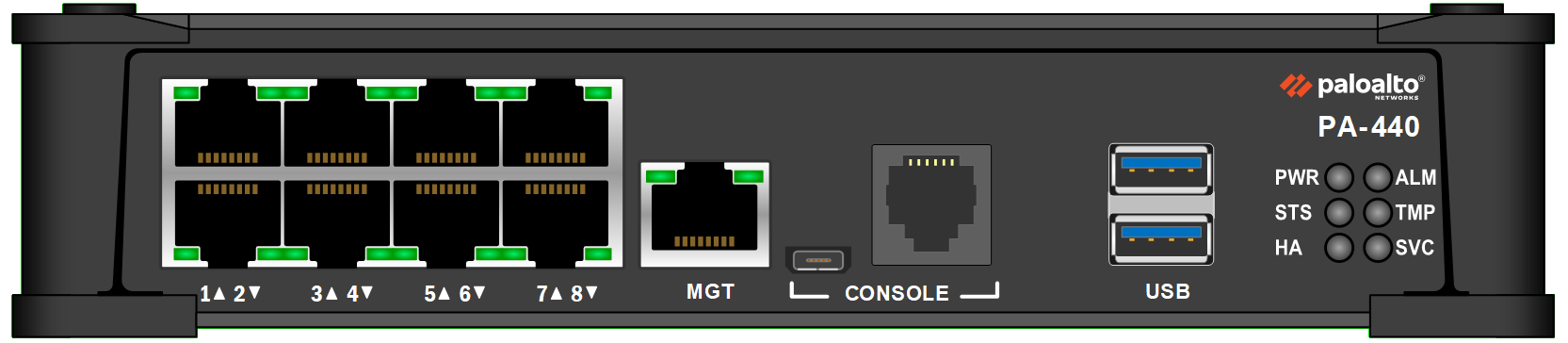
Aruba (HPE) Aruba 9106 Gateway
★ 4.3 Value Score
Technical Specifications
- Wi-Fi Standard: Wi-Fi 6 (802.11ax)
- Spatial Streams (MIMO): 4x4 MU-MIMO
- Aggregate Throughput: 2.4 Gbps
- Radios: Dual-band (2.4 GHz and 5 GHz)
- 2.4 GHz Throughput: 574 Mbps (802.11ax)
- 5 GHz Throughput: 1.2 Gbps (802.11ax)
- Uplink Port Speed: Multi-Gigabit (10GBase-T capable with optional modules)
- Max Clients: 250+
- PoE Requirement: 95W (High Power PoE)
- Form Factor: Compact wall-mount or ceiling-mount
- Security: WPA3, 802.1X, Built-in WIPS
Curation Review
- ✔ Pros: Exceptional Wi-Fi 6 performance with high client density support; Integrated wireless controller reduces infrastructure complexity; Strong enterprise security features with WPA3 and threat detection; Flexible deployment (wall/ceiling mount); Excellent range and coverage
- ✘ Cons: High power consumption requires robust PoE infrastructure; Limited to wireless access point role, not a standalone gateway/firewall; Expensive upfront licensing for management and analytics; Proprietary controller integration required; May be overkill for small deployments
- Est. Price: $1,200 - $1,800
Popular Comparisons
Palo Alto Networks PA-7500 vs Fortinet FortiGate 400G
Palo Alto Networks PA-7500 vs Aruba (HPE) Aruba 9106 Gateway
Palo Alto Networks PA-7500 vs Palo Alto Networks ION 3200
Palo Alto Networks PA-7500 vs Palo Alto Networks ION 3200H-C5G-WW
Palo Alto Networks PA-7500 vs Ubiquiti Dream Machine Special Edition (UDM-SE)