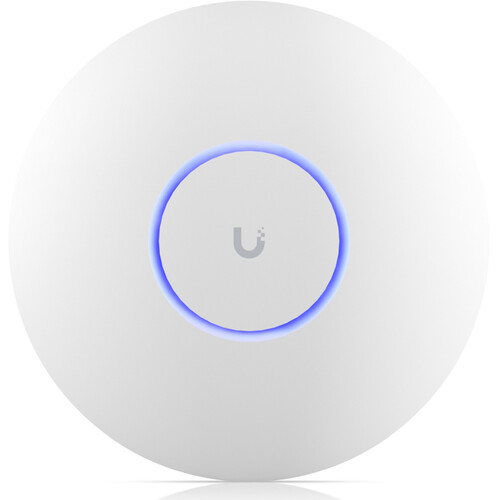
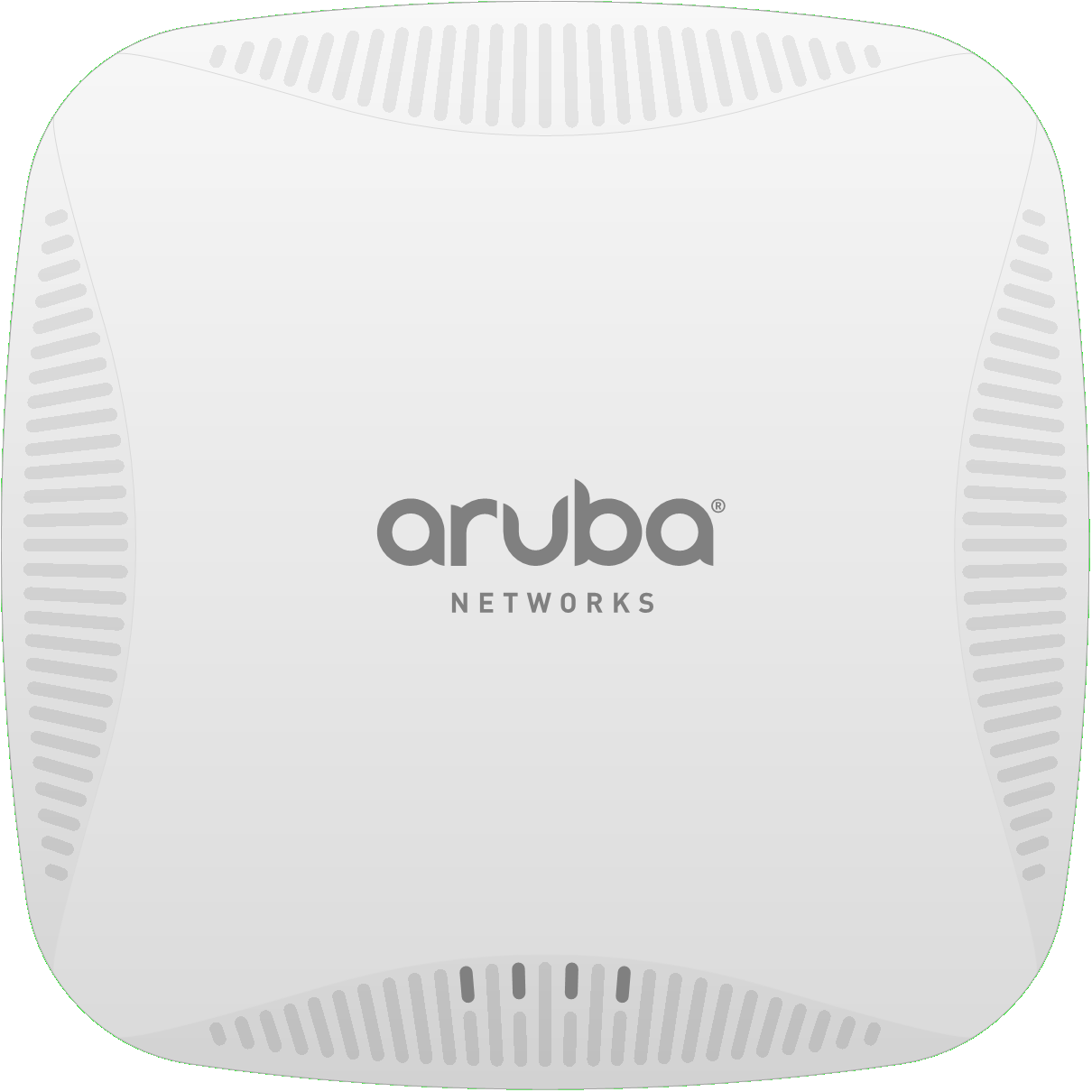
Uplink Port Speed: 1x 2.5GbE RJ45 (1G/2.5G auto-negotiation)
Max Clients: 300+ connected devices
PoE Requirement: 802.3at PoE+ (44-57V DC input), approx. 21 W typical draw
Curation Review
✔ Pros:Tri-band Wi-Fi 7 with 6 GHz support at a low entry price; 2.5GbE uplink lets it outrun standard gigabit wired backhaul; single-cable PoE+ power simplifies deployment; 300+ client capacity suits small-to-medium offices and homes; wall and ceiling mounts included; 2-year warranty; managed centrally through the UniFi controller ecosystem
✘ Cons:Only 2x2 MIMO per band, so it trails 4x4-class Wi-Fi 7 APs and the U7 Pro Max; no 10GbE uplink for high-throughput environments; requires a UniFi controller (UniFi OS or Network app) for full management; PoE+ budget leaves no headroom for power-hungry add-ons; street prices often sit above the $189 MSRP; no built-in PoE injector, so a PoE+ switch or injector is required
Est. Price:
$179 - $237
Compare Against
Aruba (HPE) AP-735
★ 3.5 Value Score
Technical Specifications
Wi-Fi Standard: Wi-Fi 7 (IEEE 802.11be), backward compatible with 802.11ax/ac/a/b/g/n; Bluetooth 5.4 LE and Zigbee radio
Spatial Streams (MIMO): 2x2 MU-MIMO on each of the 3 radios (2.4 GHz, 5 GHz, 6 GHz)
Max Clients: 512 associated clients per radio; up to 16 BSSIDs per radio
PoE Requirement: 802.3bt (Class 5, 40 W) for unrestricted operation; 802.3at (Class 4, 25.5 W) runs in restricted mode; 802.3af (Class 3) supports staging only. Worst-case draw 24 W on PoE (36 W with USB devices); DC power 20 W (31 W with USB)
Form Factor: Indoor campus access point, internal antennas, ceiling or wall mount
Product Status: End of life per some reseller listings (SHI); verify availability before purchase
Curation Review
✔ Pros:Wi-Fi 7 tri-band radio with 9.3 Gbps aggregate throughput at a lower price than the AP-755; Two 5GBASE-T multigig uplinks support 2.5 and 5 Gbps wired backhaul without a switch upgrade; Supports up to 512 clients per radio, suitable for dense campus or office deployments; Fully managed through HPE Aruba Central or AOS 10 with the same feature set as the 730 Series; Low worst-case power draw (24 W PoE) fits within 802.3bt Class 5 budgets; Dedicated BLE/Zigbee radio enables IoT and location services
✘ Cons:Only 2x2 spatial streams per band, so per-client throughput and capacity lag 4x4 Wi-Fi 7 APs like the AP-755; Uplink is multigig but not 10GbE, which limits throughput on high-density or 6 GHz heavy deployments; Requires 802.3bt Class 5 PoE for unrestricted operation, so older 802.3at switches disable USB and run in restricted mode; Some reseller listings show it as end-of-life, so availability and support may be limited; Pricing varies widely by region and SKU (for example S1G42A vs S0H13A) and sellers may show discounts from the US list price of $1,995