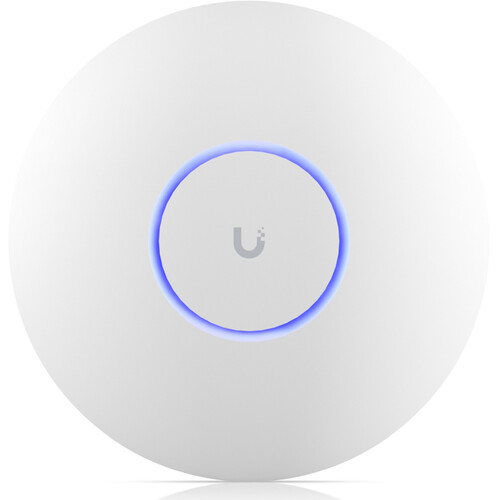
Uplink Port Speed: 1x 2.5GbE RJ45 (1G/2.5G auto-negotiation)
Max Clients: 300+ connected devices
PoE Requirement: 802.3at PoE+ (44-57V DC input), approx. 21 W typical draw
Curation Review
✔ Pros:Tri-band Wi-Fi 7 with 6 GHz support at a low entry price; 2.5GbE uplink lets it outrun standard gigabit wired backhaul; single-cable PoE+ power simplifies deployment; 300+ client capacity suits small-to-medium offices and homes; wall and ceiling mounts included; 2-year warranty; managed centrally through the UniFi controller ecosystem
✘ Cons:Only 2x2 MIMO per band, so it trails 4x4-class Wi-Fi 7 APs and the U7 Pro Max; no 10GbE uplink for high-throughput environments; requires a UniFi controller (UniFi OS or Network app) for full management; PoE+ budget leaves no headroom for power-hungry add-ons; street prices often sit above the $189 MSRP; no built-in PoE injector, so a PoE+ switch or injector is required
Est. Price:
$179 - $237
Compare Against
Cisco Catalyst CW9178I
★ 3.4 Value Score
Technical Specifications
Wi-Fi Standard: Wi-Fi 7 (802.11be); also supports Wi-Fi 6 features (MU-MIMO, OFDMA, BSS Coloring, TWT)
Spatial Streams (MIMO): 4x4:4 SS on each radio (2.4 GHz, 5 GHz, 6 GHz; plus second 5 GHz radio in quad-radio mode) with 802.3bt power
Radios (bands): Tri-radio by default: 2.4 GHz, 5 GHz, 6 GHz. Optional quad-radio mode adds a second 5 GHz radio. Also includes a dedicated 2.4 GHz IoT radio and a scanning radio
Uplink Port Speed: 2x 10 Gbps mGig PoE-in ports (1/2.5/5/10G); 10 Gbps max aggregate in LAG mode
Max Clients: 1200 (400 per radio)
PoE Requirement: 802.3bt (Class 6) for full performance: 4x4 on all radios, 10G on both uplinks, USB enabled. 802.3at reduces radios to 2x2 (quad-radio) or 2.5G/1G uplinks and disables USB. 802.3af disables all radios
Channel Widths: Up to 320 MHz on 6 GHz; up to 160 MHz on 5 GHz
Form Factor: Indoor ceiling/wall-mount AP, 25 x 25 x 5.1 cm, 1.87 kg (mounting bracket not included)
Management: Catalyst 9800 WLC (IOS XE 17.15.2+), Catalyst Center, or Meraki cloud (SKU-dependent)
Max SSIDs/WLANs: 16 per band
Curation Review
✔ Pros:Tri-band Wi-Fi 7 with 4x4:4 streams on every radio; 6 GHz support with 320 MHz channels; Dual 10G mGig uplinks with LAG for up to 10 Gbps aggregate backhaul; Supports up to 1200 clients (400 per radio); Dedicated IoT and scanning radios for security and RF analytics; Optional quad-radio mode for extra 5 GHz capacity; Manageable from Catalyst 9800/Catalyst Center or Meraki cloud depending on SKU
✘ Cons:Full performance requires 802.3bt (Class 6) PoE, which many switches do not provide; 802.3at power reduces radio and uplink capacity; 802.3af disables all radios; Indoor-only design; Mounting hardware is sold separately; Premium price compared with Wi-Fi 6E and Wi-Fi 6 APs; Regional SKU variants (CFG, RTG, CFG++) complicate sourcing and licensing