Radios (bands): 3 Wi-Fi radios (2.4 GHz, 5 GHz, 6 GHz) plus integrated Bluetooth 5.1 LE radio
Uplink Port Speed: 1x RJ-45 multigigabit port (100M / 1G / 2.5G)
Max Clients: Not published in the Cisco datasheet; unverified estimate of 200 per radio (about 600 per AP) based on the Catalyst 9800 client-limit guidance for non-9136 APs
PoE Requirement: 802.3bt (UPOE) for full functionality, 30.0 W max; 802.3at (PoE+) supported at 25.0 W max with USB disabled and 2.4 GHz at 2x2; 802.3af (14.0 W) for staging only with radios off
Ports (additional): 1x USB 2.0 (4.5 W), console port
Management: Cloud-managed (Meraki) or on-premises via Catalyst 9800 WLC / Cisco DNA Center
Form Factor: Indoor ceiling/wall-mount enterprise access point
Curation Review
✔ Pros:Tri-band Wi-Fi 6E with dedicated 6 GHz radio for less congested spectrum; 4x4 MU-MIMO on 5 GHz and 6 GHz for high client capacity; 2.5G multigigabit uplink supports higher wireless throughput than 1G APs; Integrated Bluetooth 5.1 LE radio for IoT and asset tracking without extra hardware; Supports both cloud (Meraki) and controller-based (Catalyst 9800) management; Lower-power 802.3at operation available when 802.3bt PoE is not present
✘ Cons:Full performance requires 802.3bt (UPOE) PoE, which many older switches do not provide; Only one wired uplink port, so no link aggregation or redundancy; Cisco does not publish max client count or aggregate throughput in the datasheet; Licensing is required in addition to hardware cost, raising total cost of ownership; 2.4 GHz radio is only 2x2, limiting legacy band performance; Indoor-only model, so unsuitable for outdoor or harsh environments
Est. Price:
$1,105 - $1,510
Compare Against
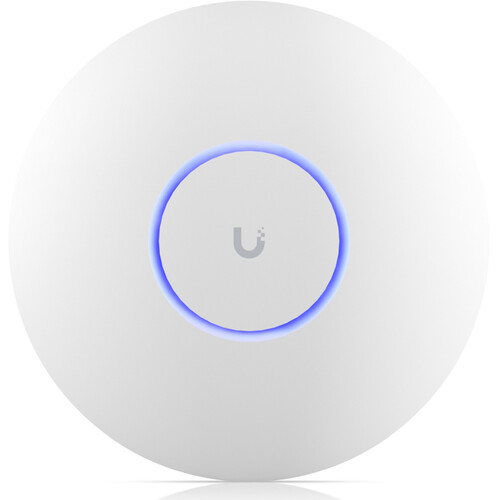
Ubiquiti UniFi U7 Pro
★ 5.0 Value Score
Technical Specifications
Wi-Fi Standard: Wi-Fi 7 (802.11be), tri-band
Spatial Streams (MIMO): 6 total; 2x2 MIMO per band (2.4 GHz, 5 GHz, 6 GHz)
Uplink Port Speed: 1x 2.5GbE RJ45 (1G/2.5G auto-negotiation)
Max Clients: 300+ connected devices
PoE Requirement: 802.3at PoE+ (44-57V DC input), approx. 21 W typical draw
Curation Review
✔ Pros:Tri-band Wi-Fi 7 with 6 GHz support at a low entry price; 2.5GbE uplink lets it outrun standard gigabit wired backhaul; single-cable PoE+ power simplifies deployment; 300+ client capacity suits small-to-medium offices and homes; wall and ceiling mounts included; 2-year warranty; managed centrally through the UniFi controller ecosystem
✘ Cons:Only 2x2 MIMO per band, so it trails 4x4-class Wi-Fi 7 APs and the U7 Pro Max; no 10GbE uplink for high-throughput environments; requires a UniFi controller (UniFi OS or Network app) for full management; PoE+ budget leaves no headroom for power-hungry add-ons; street prices often sit above the $189 MSRP; no built-in PoE injector, so a PoE+ switch or injector is required