Primary Device
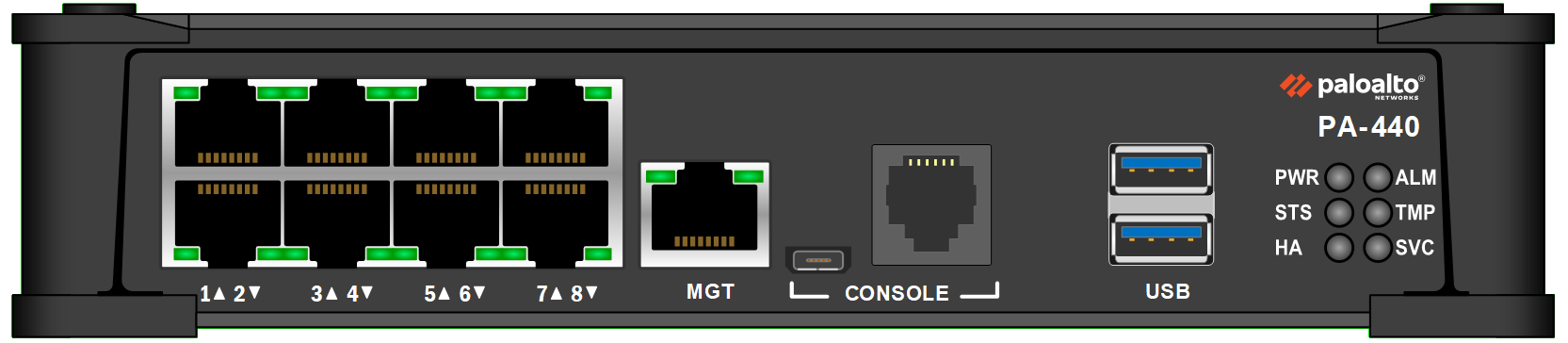
Palo Alto Networks ION 3200
★ 4.3 Value Score
Technical Specifications
- Product Type: SD-WAN Branch Office Appliance
- Throughput (Estimated): 1-2 Gbps
- Max Interfaces: 6-8 ports
- Form Factor: Desktop/Rackmount
- Processor: Multi-core Intel
- Memory: 8-16 GB RAM
- Storage: 256 GB SSD
- Encryption: AES-256, IPsec, TLS
- Management: Cloud-based (Panorama/Prisma SD-WAN)
- Power Consumption: 150-200W
Curation Review
- ✔ Pros: Excellent SD-WAN orchestration and cloud integration; Seamless integration with Palo Alto Networks security stack (firewalls, threat prevention); Reliable branch office routing with redundancy and failover capabilities
- ✘ Cons: Premium pricing typical of enterprise Palo Alto solutions; Requires Panorama or Prisma SD-WAN management subscriptions (additional cost); Steep learning curve for smaller organizations unfamiliar with Palo Alto ecosystem
- Est. Price: $8,000 - $12,000
Compare Against

Juniper Networks SRX4600
★ 3.2 Value Score
Technical Specifications
- Firewall Throughput: 40 Gbps
- Threat Prevention Throughput: 18-20 Gbps
- IPsec VPN Throughput: 8-12 Gbps
- Max Sessions: 4,000,000
- New Sessions/sec: 150,000+
- Interfaces: 12x 1GbE + 2x 10GbE (configurable); SFP+ available
- Form Factor: 2U Rackmount
Curation Review
- ✔ Pros: High throughput with integrated advanced security (IPS, antivirus, threat prevention); Excellent IPsec VPN and SSL VPN performance supporting 10,000+ tunnels; Modular licensing and AppSecure/IPS updates enable flexible feature expansion; Low latency and jitter for branch office applications with high reliability; Superior log analytics and visibility into network threats; Supports Juniper Contrail (cloud-native) and J-Flow for NetFlow analysis
- ✘ Cons: High initial acquisition cost; enterprise licensing model expensive at scale; Steep learning curve for CLI/JunOS operating system configuration; Limited PoE power delivery compared to modular platforms; Threat Prevention throughput drops 50%+ under sustained encrypted traffic inspection; Smaller partner ecosystem compared to Cisco/Palo Alto; Requires frequent IPS/threat database updates with associated disk/CPU overhead
- Est. Price: $80,000 - $150,000
Popular Comparisons
Palo Alto Networks ION 3200 vs Fortinet FortiGate 400G
Palo Alto Networks ION 3200 vs Aruba (HPE) Aruba 9106 Gateway
Palo Alto Networks ION 3200 vs Palo Alto Networks ION 3200H-C5G-WW
Palo Alto Networks ION 3200 vs Ubiquiti Dream Machine Special Edition (UDM-SE)
Palo Alto Networks ION 3200 vs Ubiquiti UniFi Dream Machine Pro Max