Primary Device
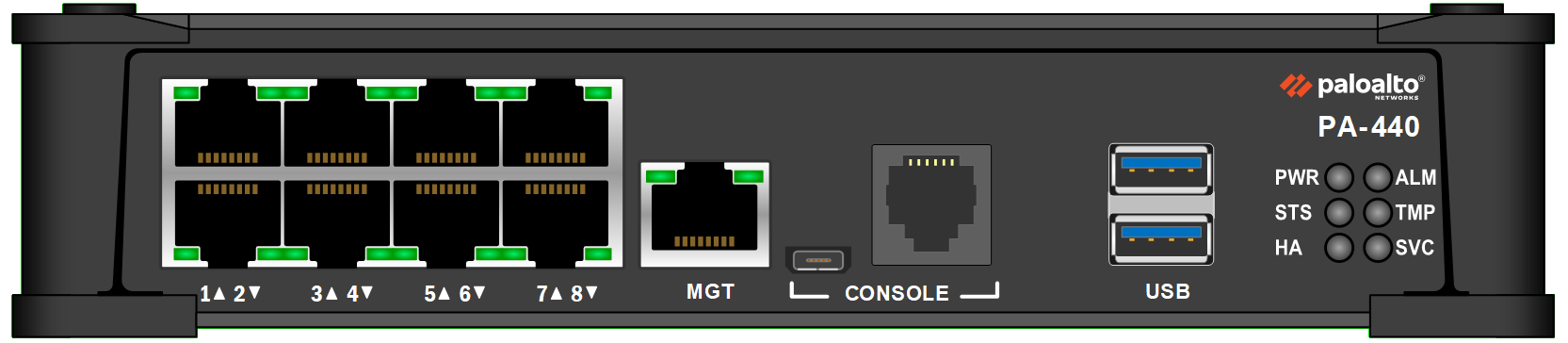
Palo Alto Networks ION 3200
★ 4.3 Value Score
Technical Specifications
- Product Type: SD-WAN Branch Office Appliance
- Throughput (Estimated): 1-2 Gbps
- Max Interfaces: 6-8 ports
- Form Factor: Desktop/Rackmount
- Processor: Multi-core Intel
- Memory: 8-16 GB RAM
- Storage: 256 GB SSD
- Encryption: AES-256, IPsec, TLS
- Management: Cloud-based (Panorama/Prisma SD-WAN)
- Power Consumption: 150-200W
Curation Review
- ✔ Pros: Excellent SD-WAN orchestration and cloud integration; Seamless integration with Palo Alto Networks security stack (firewalls, threat prevention); Reliable branch office routing with redundancy and failover capabilities
- ✘ Cons: Premium pricing typical of enterprise Palo Alto solutions; Requires Panorama or Prisma SD-WAN management subscriptions (additional cost); Steep learning curve for smaller organizations unfamiliar with Palo Alto ecosystem
- Est. Price: $8,000 - $12,000
Compare Against

Juniper Networks SRX4300
★ 3.3 Value Score
Technical Specifications
- Firewall Throughput: 500 Gbps
- Threat Prevention Throughput: 100-150 Gbps
- IPsec VPN Throughput: 50-75 Gbps
- Max Sessions: 4-8 million
- New Sessions/sec: 200,000-500,000
- Interfaces: Modular design with up to 24+ Gigabit Ethernet ports (configurable via line cards)
- Form Factor: 4-slot modular chassis, 3RU
Curation Review
- ✔ Pros: Exceptional modularity with hot-swappable line cards for capacity expansion; Enterprise-grade threat prevention with IPS, antivirus, and application security; High-performance IPsec VPN suitable for large branch deployments; Excellent integration with Juniper ecosystem (Contrail, Paragon, Sky Enterprise); Proven reliability with 99.99% uptime SLA; Advanced routing and security policies at line rate
- ✘ Cons: Significant capital expenditure ($120k-$250k+) limits adoption for mid-market; Complex management curve requires skilled Juniper JNCIA/JNCIS certification; High power consumption (2.5-3.5 kW) and cooling requirements; IPsec VPN throughput (50-75 Gbps) doesn't scale to full firewall throughput; Licensing costs can double TCO with threat prevention subscriptions; Proprietary spare parts and limited third-party support ecosystem
- Est. Price: $120,000 - $250,000
Popular Comparisons
Palo Alto Networks ION 3200 vs Fortinet FortiGate 400G
Palo Alto Networks ION 3200 vs Aruba (HPE) Aruba 9106 Gateway
Palo Alto Networks ION 3200 vs Palo Alto Networks ION 3200H-C5G-WW
Palo Alto Networks ION 3200 vs Ubiquiti Dream Machine Special Edition (UDM-SE)
Palo Alto Networks ION 3200 vs Ubiquiti UniFi Dream Machine Pro Max