Primary Device
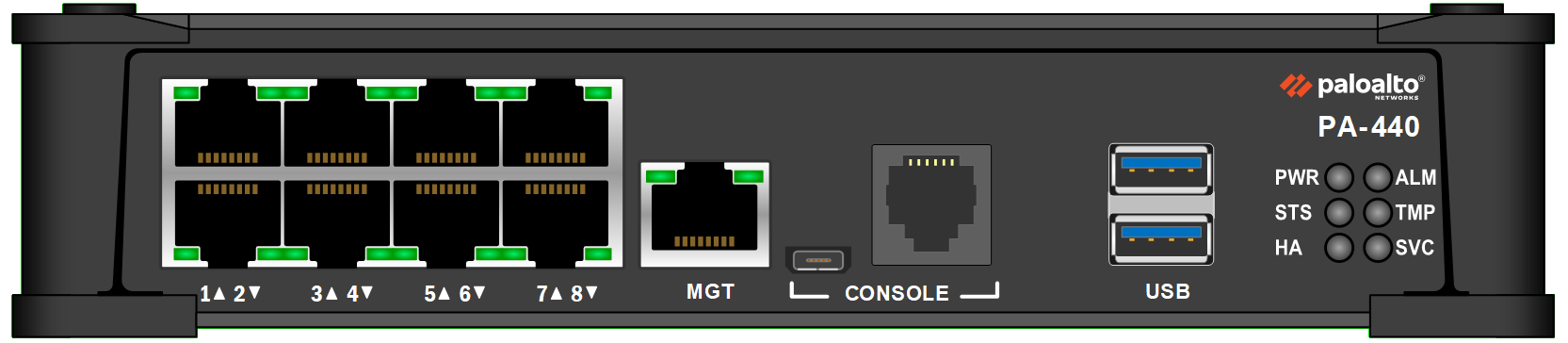
Palo Alto Networks ION 3200
★ 4.3 Value Score
Technical Specifications
- Product Type: SD-WAN Branch Office Appliance
- Throughput (Estimated): 1-2 Gbps
- Max Interfaces: 6-8 ports
- Form Factor: Desktop/Rackmount
- Processor: Multi-core Intel
- Memory: 8-16 GB RAM
- Storage: 256 GB SSD
- Encryption: AES-256, IPsec, TLS
- Management: Cloud-based (Panorama/Prisma SD-WAN)
- Power Consumption: 150-200W
Curation Review
- ✔ Pros: Excellent SD-WAN orchestration and cloud integration; Seamless integration with Palo Alto Networks security stack (firewalls, threat prevention); Reliable branch office routing with redundancy and failover capabilities
- ✘ Cons: Premium pricing typical of enterprise Palo Alto solutions; Requires Panorama or Prisma SD-WAN management subscriptions (additional cost); Steep learning curve for smaller organizations unfamiliar with Palo Alto ecosystem
- Est. Price: $8,000 - $12,000
Compare Against

Fortinet FortiGate 200G
★ 3.3 Value Score
Technical Specifications
- Firewall Throughput: 200 Gbps
- Threat Prevention Throughput: 50 Gbps
- IPsec VPN Throughput: 5 Gbps
- Max Concurrent Sessions: 8,000,000
- New Sessions/sec: 500,000
- Interfaces: 2u00d7 40GbE QSFP+ (breakout to 4u00d7 10GbE) + 4u00d7 1GbE RJ45 + 1u00d7 Console port
- Form Factor: 1U Rack Mount (2-socket Xeon architecture)
Curation Review
- ✔ Pros: Exceptional 200 Gbps throughput ideal for large enterprise/carrier deployments; Advanced threat inspection at 50 Gbps TPS for real-time malware/IPS protection; Rich interface flexibility with 40GbE and 10GbE options; Native support for VPN, SD-WAN, and advanced routing; FortiOS ecosystem integrates with FortiManager, FortiAnalyzer for centralized management and visibility; Proven reliability with carrier-grade redundancy (HA clustering)
- ✘ Cons: High capital cost ($50k–$80k) limits adoption to large organizations; Relatively lower VPN throughput (5 Gbps) compared to firewall throughput may bottleneck encrypted traffic in high-bandwidth scenarios; Requires FortiOS licensing subscription for threat signatures; Power consumption (~2–3 kW) and cooling requirements add operational overhead; Steeper learning curve compared to smaller form factors; Management complexity in multi-appliance deployments
- Est. Price: $52,000 - $78,000
Popular Comparisons
Palo Alto Networks ION 3200 vs Fortinet FortiGate 400G
Palo Alto Networks ION 3200 vs Aruba (HPE) Aruba 9106 Gateway
Palo Alto Networks ION 3200 vs Palo Alto Networks ION 3200H-C5G-WW
Palo Alto Networks ION 3200 vs Ubiquiti Dream Machine Special Edition (UDM-SE)
Palo Alto Networks ION 3200 vs Ubiquiti UniFi Dream Machine Pro Max