Primary Device
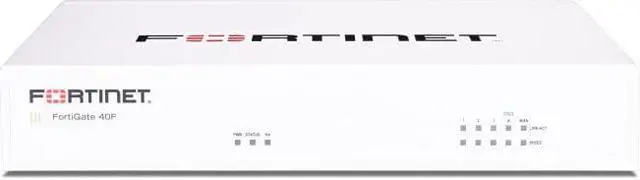
Fortinet FortiGate 40F
★ 3.4 Value Score
Technical Specifications
- Firewall Throughput: 5 Gbps (1518/512/64-byte UDP)
- Threat Prevention Throughput: 600 Mbps (enterprise mix; NGFW throughput 800 Mbps, IPS 1 Gbps)
- IPsec VPN Throughput: 4.4 Gbps (512-byte); 200 gateway-to-gateway and 250 client-to-gateway tunnels; SSL-VPN 490 Mbps
- Max Sessions: 700,000 concurrent TCP sessions
- New Sessions/sec: 35,000 TCP (one reseller lists 37,000)
- Interfaces: 3 x GE RJ45 internal, 1 x GE RJ45 WAN/DMZ, 1 x GE RJ45 FortiLink, 1 x console RJ45, 1 x USB 3.0 Type-A (FortiWiFi variant adds Wi-Fi)
- Form Factor: Desktop
Curation Review
- ✔ Pros: Strong 5 Gbps firewall throughput for its size; 4.4 Gbps IPsec VPN throughput; Low hardware-only price for a FortiOS firewall; Supports 200 gateway and 250 client VPN tunnels; FortiLink support for managing FortiSwitch units; 700,000 concurrent sessions suits small offices
- ✘ Cons: Threat prevention throughput of 600 Mbps is low for security-heavy traffic; Only four RJ45 Gigabit ports, with no multi-gigabit or SFP uplink; Full security features require paid FortiGuard licensing, which raises total cost well above hardware price; Desktop form factor with no built-in Wi-Fi on the base model; Specs and prices come from reseller listings, not an official Fortinet datasheet I could access
- Est. Price: $350 - $417
Compare Against

Ubiquiti Enterprise Fortress Gateway (EFG)
★ 4.9 Value Score
Technical Specifications
- Firewall Throughput: 23.5 Gbps (routing, iPerf3, DHCP WAN)
- Threat Prevention Throughput: 12.5 Gbps (IDS/IPS)
- IPsec VPN Throughput: 580 Mbps (site-to-site, single tunnel)
- Max Sessions: 1,000,000 concurrent
- New Sessions/sec: 71,000 (listed under general capacity; not specific to VPN or IPsec)
- Interfaces: 2x 2.5GbE RJ45, 2x 25G SFP28, 2x 10G SFP+ (some listings show 2x RJ45 + 4x SFP28; verify against the Ubiquiti datasheet)
- Form Factor: 1U rack-mount, dual hot-swappable PSUs
- SSL/TLS Inspection Concurrent Sessions: 10,000 (5,000 recommended under heavy traffic)
- CPU / Memory: 18-core ARM v8.2 @ 2 GHz, 16 GB DDR4
- UniFi Capacity: 500+ UniFi devices, 5,000+ clients
Curation Review
- ✔ Pros: 25G SFP28 and 10G SFP+ uplinks at a gateway price point; 23.5 Gbps routing throughput; 1 million concurrent sessions; 18-core ARM CPU with 16 GB RAM; hot-swappable redundant PSUs; supports 500+ UniFi devices and 5,000+ clients; manages through UniFi Network controller with a single pane of glass
- ✘ Cons: IPsec VPN throughput of 580 Mbps is low for a gateway at this price; IDS/IPS throughput of 12.5 Gbps halves routing performance when threat inspection is enabled; SSL/TLS inspection is limited to about 10,000 concurrent sessions; port configuration differs across listings and should be verified; frequently out of stock at major US retailers, with a $170 memory surcharge at some resellers; no built-in Wi-Fi, so it depends on separate UniFi APs and switches; reviewers cite a steeper learning curve than consumer-grade routers
- Est. Price: $1,999 - $2,892
Popular Comparisons
Fortinet FortiGate 40F vs Ubiquiti UniFi Cloud Gateway Fiber
Fortinet FortiGate 40F vs Ubiquiti UniFi Dream Machine Pro Max
Fortinet FortiGate 40F vs Ubiquiti Cloud Gateway Max
Fortinet FortiGate 40F vs Ubiquiti UniFi Cloud Gateway Max (UCG-Max)
Fortinet FortiGate 40F vs Ubiquiti Enterprise Fortress Gateway (EFG)