Primary Device

Cisco Secure Firewall 3110
★ 3.2 Value Score
Technical Specifications
- Firewall Throughput: 3.75 Gbps
- Threat Prevention Throughput: 1.25 Gbps
- IPsec VPN Throughput: 1.5 Gbps
- Max Sessions: 100,000
- New Sessions/sec: 3,500
- Interfaces: 8 u00d7 1GbE + 2 u00d7 SFP (10GbE capable)
- Form Factor: 1RU Rack-Mountable
Curation Review
- ✔ Pros: Strong integrated threat prevention with Snort IDS/IPS and advanced security features (Application Control, URL Filtering, File Reputation); Excellent performance-to-cost ratio for mid-market deployments; Dual gigabit uplinks with optional 10GbE SFP support for future scalability; Advanced management integration with Cisco Defense Orchestrator (CDO) for centralized visibility; Reliable platform with extensive enterprise support and licensing options; Native high availability and redundancy capabilities for mission-critical deployments
- ✘ Cons: Complex licensing model with separate subscriptions required for Threat Prevention, AMP, and advanced features increasing total cost of ownership; Significant gap between Firewall Throughput (3.75 Gbps) and Threat Prevention Throughput (1.25 Gbps) limits inspection capability under load; Management interface historically cumbersome (though improving with CDO migration); IPsec VPN throughput of 1.5 Gbps inadequate for high-volume encrypted traffic deployments; Moderate-to-high power consumption (up to 550W) impacts branch office operating costs; Smaller interface count and slower throughput compared to higher-end Secure Firewall models (4120/4140) limits long-term scalability
- Est. Price: $15,000 - $25,000
Compare Against
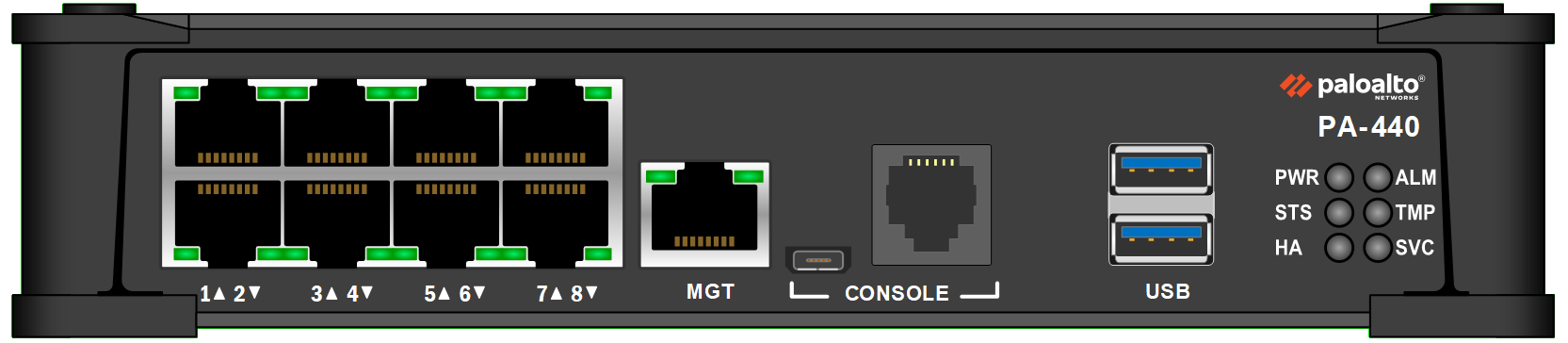
Palo Alto Networks ION 3200
★ 4.3 Value Score
Technical Specifications
- Product Type: SD-WAN Branch Office Appliance
- Throughput (Estimated): 1-2 Gbps
- Max Interfaces: 6-8 ports
- Form Factor: Desktop/Rackmount
- Processor: Multi-core Intel
- Memory: 8-16 GB RAM
- Storage: 256 GB SSD
- Encryption: AES-256, IPsec, TLS
- Management: Cloud-based (Panorama/Prisma SD-WAN)
- Power Consumption: 150-200W
Curation Review
- ✔ Pros: Excellent SD-WAN orchestration and cloud integration; Seamless integration with Palo Alto Networks security stack (firewalls, threat prevention); Reliable branch office routing with redundancy and failover capabilities
- ✘ Cons: Premium pricing typical of enterprise Palo Alto solutions; Requires Panorama or Prisma SD-WAN management subscriptions (additional cost); Steep learning curve for smaller organizations unfamiliar with Palo Alto ecosystem
- Est. Price: $8,000 - $12,000
Popular Comparisons
Cisco Secure Firewall 3110 vs Fortinet FortiGate 400G
Cisco Secure Firewall 3110 vs Aruba (HPE) Aruba 9106 Gateway
Cisco Secure Firewall 3110 vs Palo Alto Networks ION 3200
Cisco Secure Firewall 3110 vs Palo Alto Networks ION 3200H-C5G-WW
Cisco Secure Firewall 3110 vs Ubiquiti Dream Machine Special Edition (UDM-SE)