Primary Device

Cisco Catalyst 9178i
★ 4.3 Value Score
Technical Specifications
- Switching Capacity: 204.8 Tbps (full chassis)
- Forwarding Rate: 204.8 Tbps
- Ports: Up to 288 u00d7 10/25/40/100 Gbps (via modular line cards)
- Layer: L2/L3
- Stacking Support: Yes (up to 9 units via Stacking Cables)
- Chassis Type: 3-slot modular chassis
- PoE Budget: Up to 5.6 kW per module (optional PoE+ modules)
- Max Power Consumption: 10.2 kW (full chassis)
- Backplane Bandwidth: 204.8 Tbps
- Throughput per Port: Up to 100 Gbps per port
- Cooling: Redundant, variable-speed fans
- Uplinks: Multiple 100 Gbps QSFP28 capable
Curation Review
- ✔ Pros: Industry-leading 204.8 Tbps switching fabric supports next-generation high-density deployments; Modular architecture allows flexible line-card configurations for different port densities and speeds; Full redundancy support (PSU, fan, uplinks) ensures carrier-grade reliability; Native support for Cisco DNA Center and SD-Access intent-based networking; Excellent in-service upgrade capabilities with no traffic disruption
- ✘ Cons: Significantly higher capital cost compared to fixed-configuration switches; Requires skilled technical staff for modular line-card installation and configuration; Power and cooling infrastructure overhead for large deployments; Complexity of managing modular chassis in smaller networks may be overkill; Limited flexibility in port mix compared to disaggregated options
- Est. Price: $85,000 - $125,000
Compare Against
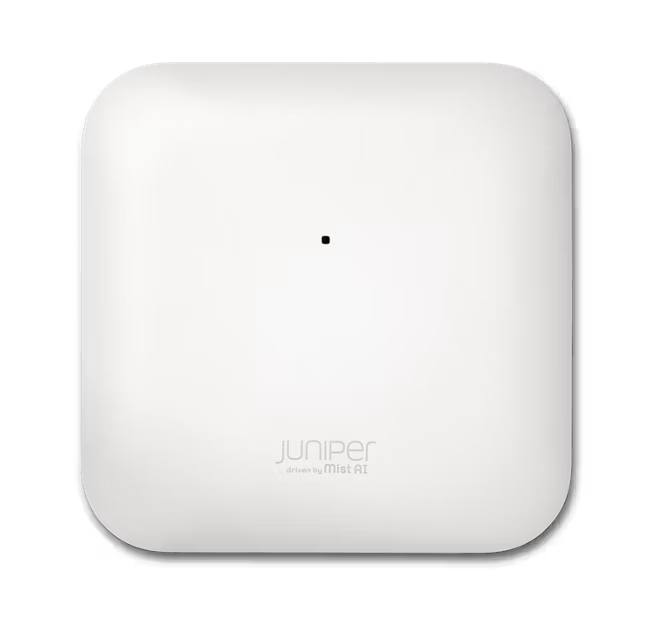
Juniper Networks Mist AP37
★ 3.4 Value Score
Technical Specifications
- Wi-Fi Standard: Wi-Fi 6 (802.11ax)
- Spatial Streams (MIMO): 4x4 MIMO (dual-band)
- Aggregate Throughput: 1.73 Gbps
- Radios: Dual-band (2.4 GHz, 5 GHz)
- Uplink Port Speed: 1 GbE (Gigabit Ethernet)
- Max Clients: 256 concurrent clients
- PoE Requirement: PoE+ (802.3at, 30W)
Curation Review
- ✔ Pros: Enterprise-grade cloud-managed Wi-Fi 6 with industry-leading AI-driven insights via Mist platform; Compact, low-profile design ideal for modern office aesthetics; Excellent 802.11ax throughput and range with Bluetooth/BLE capabilities for indoor positioning; Integrated threat detection and network troubleshooting via cloud analytics; Lifetime software updates and support through Mist subscription
- ✘ Cons: Higher upfront cost compared to traditional non-cloud-managed APs; Requires Mist cloud subscription for optimal features (cloud dependency); Single gigabit uplink may bottleneck in high-density deployments; PoE+ power requirement limits deployment flexibility in some older infrastructure; Enterprise-focused feature set may be overkill for small/medium venues
- Est. Price: $450 - $650