Primary Device

Cisco Catalyst 9166 Series (CW9166)
★ 4.2 Value Score
Technical Specifications
- Wi-Fi Standard: 802.11ax (Wi-Fi 6E, 6 GHz capable); also 802.11a/b/g/n/ac backward compatible
- Spatial Streams (MIMO): 4x4:4 on each of the three client radios (2.4 GHz, 5 GHz, 6 GHz); MU-MIMO and OFDMA supported
- Aggregate Throughput: Up to 7.78 Gbps tri-radio aggregate (maximum over-the-air PHY/chipset frame rate, not per-client throughput)
- Radios (bands): Tri-radio 4x4:4: 2.4 GHz client radio, 5 GHz client radio, 6 GHz client radio; plus tri-band scanning radio (2.4/5/6 GHz) for security/RF analytics and a 2.4 GHz Bluetooth Low Energy radio
- Uplink Port Speed: 1x multigigabit RJ45 (100 Mbps / 1 Gbps / 2.5 Gbps / 5 Gbps BASE-T); also 1 USB 2.0 Type-A port
- Max Clients: Not published in the sources reviewed
- PoE Requirement: 802.3bt (UPOE) 30.5 W for full functionality including USB; 802.3at (PoE+) 25 W supported with reduced functionality and no USB; 802.3af not supported; 54 V DC option available
- Form Factor: Indoor ceiling/wall-mount access point; omnidirectional (CW9166I) or directional (CW9166D1) antenna variants
- Dimensions: 241.3 x 241.3 x 56.9 mm (CW9166I) / 57.9 mm height (CW9166D1); approx. 1.6 kg
- Management: Catalyst 9800 wireless controllers (IOS-XE) or Meraki cloud (CW9166I-MR / CW9166D1-MR SKUs)
Curation Review
- ✔ Pros: Tri-band Wi-Fi 6E with 4x4:4 on every client radio for high-density capacity; dedicated tri-band scanning radio for WIPS, spectrum analysis, and location analytics; multigigabit 5 Gbps uplink on a single RJ45 port; Bluetooth Low Energy radio for beacons and asset tracking; supports both Catalyst 9800 controller and Meraki cloud management; full functionality on 802.3bt PoE with USB output
- ✘ Cons: Full feature set requires 802.3bt (UPOE) power, and 802.3at operation reduces functionality; only one uplink port, so no link aggregation or redundancy; premium price compared with many Wi-Fi 6E APs; maximum client count is not published in available sources; Catalyst (CW9166I-B/-E) and Meraki (CW9166I-MR) SKUs are the same hardware under different management licences, which can confuse purchasing; end-of-sale/end-of-life status is unconfirmed and should be checked with Cisco
- Est. Price: $1,136 - $3,317
Compare Against
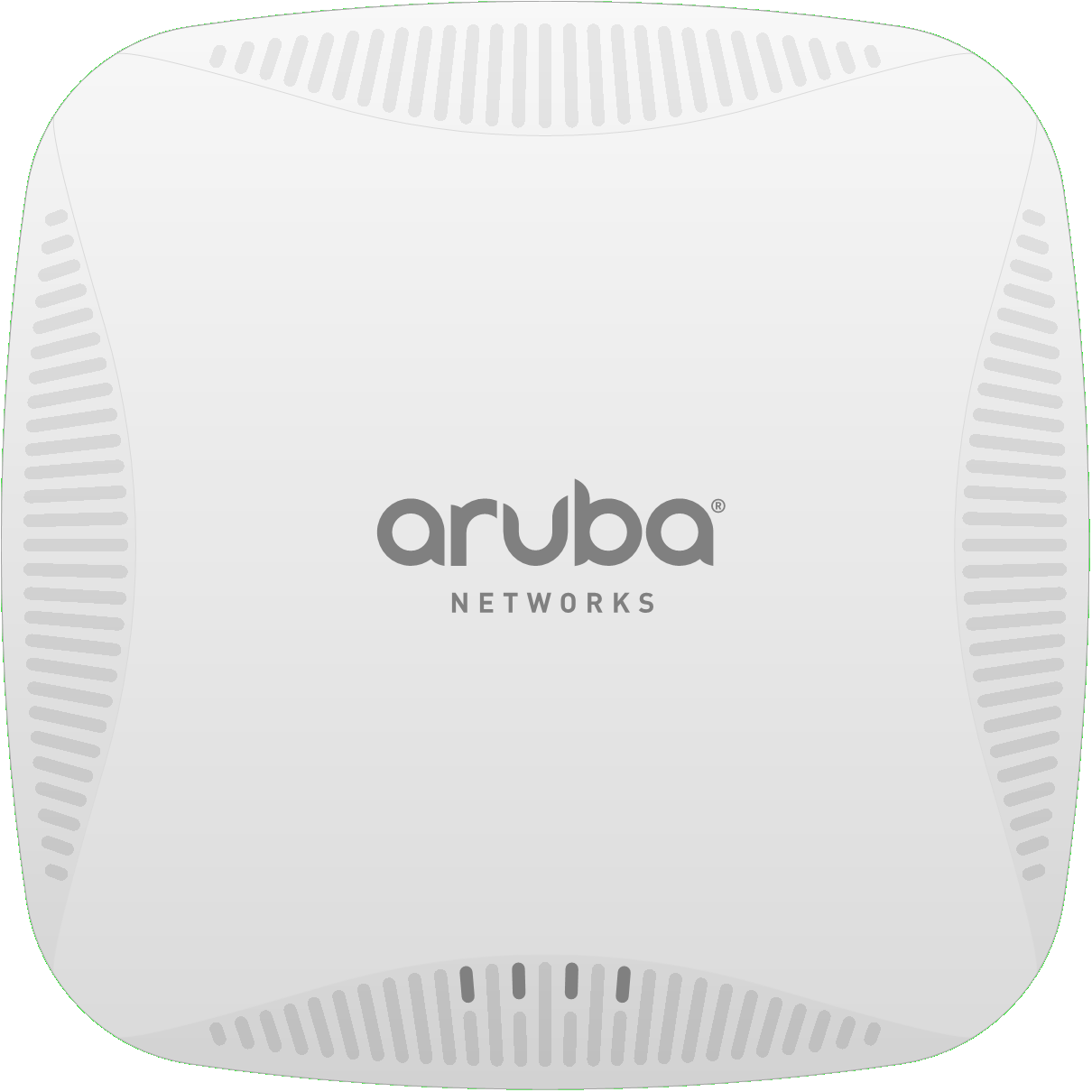
Aruba (HPE) AP-735
★ 3.5 Value Score
Technical Specifications
- Wi-Fi Standard: Wi-Fi 7 (IEEE 802.11be), backward compatible with 802.11ax/ac/a/b/g/n; Bluetooth 5.4 LE and Zigbee radio
- Spatial Streams (MIMO): 2x2 MU-MIMO on each of the 3 radios (2.4 GHz, 5 GHz, 6 GHz)
- Aggregate Throughput: 9.3 Gbps tri-radio aggregate (HPE rating)
- Radios (bands): Tri-radio: 2.4 GHz, 5 GHz, 6 GHz (concurrent), plus dedicated BLE/Zigbee radio
- Uplink Port Speed: 2x 5GBASE-T multigig RJ-45 (auto-negotiating 100 Mbps / 1 / 2.5 / 5 Gbps), 1x USB-C console/USB, 2x USB
- Max Clients: 512 associated clients per radio; up to 16 BSSIDs per radio
- PoE Requirement: 802.3bt (Class 5, 40 W) for unrestricted operation; 802.3at (Class 4, 25.5 W) runs in restricted mode; 802.3af (Class 3) supports staging only. Worst-case draw 24 W on PoE (36 W with USB devices); DC power 20 W (31 W with USB)
- Form Factor: Indoor campus access point, internal antennas, ceiling or wall mount
- Product Status: End of life per some reseller listings (SHI); verify availability before purchase
Curation Review
- ✔ Pros: Wi-Fi 7 tri-band radio with 9.3 Gbps aggregate throughput at a lower price than the AP-755; Two 5GBASE-T multigig uplinks support 2.5 and 5 Gbps wired backhaul without a switch upgrade; Supports up to 512 clients per radio, suitable for dense campus or office deployments; Fully managed through HPE Aruba Central or AOS 10 with the same feature set as the 730 Series; Low worst-case power draw (24 W PoE) fits within 802.3bt Class 5 budgets; Dedicated BLE/Zigbee radio enables IoT and location services
- ✘ Cons: Only 2x2 spatial streams per band, so per-client throughput and capacity lag 4x4 Wi-Fi 7 APs like the AP-755; Uplink is multigig but not 10GbE, which limits throughput on high-density or 6 GHz heavy deployments; Requires 802.3bt Class 5 PoE for unrestricted operation, so older 802.3at switches disable USB and run in restricted mode; Some reseller listings show it as end-of-life, so availability and support may be limited; Pricing varies widely by region and SKU (for example S1G42A vs S0H13A) and sellers may show discounts from the US list price of $1,995
- Est. Price: $1,250 - $1,995
Popular Comparisons
Cisco Catalyst 9166 Series (CW9166) vs Ubiquiti UniFi U7 Pro
Cisco Catalyst 9166 Series (CW9166) vs Ubiquiti U6 Pro
Cisco Catalyst 9166 Series (CW9166) vs Cisco Catalyst 9178i
Cisco Catalyst 9166 Series (CW9166) vs Cisco Catalyst 9176I (CW9176I)
Cisco Catalyst 9166 Series (CW9166) vs Ubiquiti U6-Pro