Primary Device
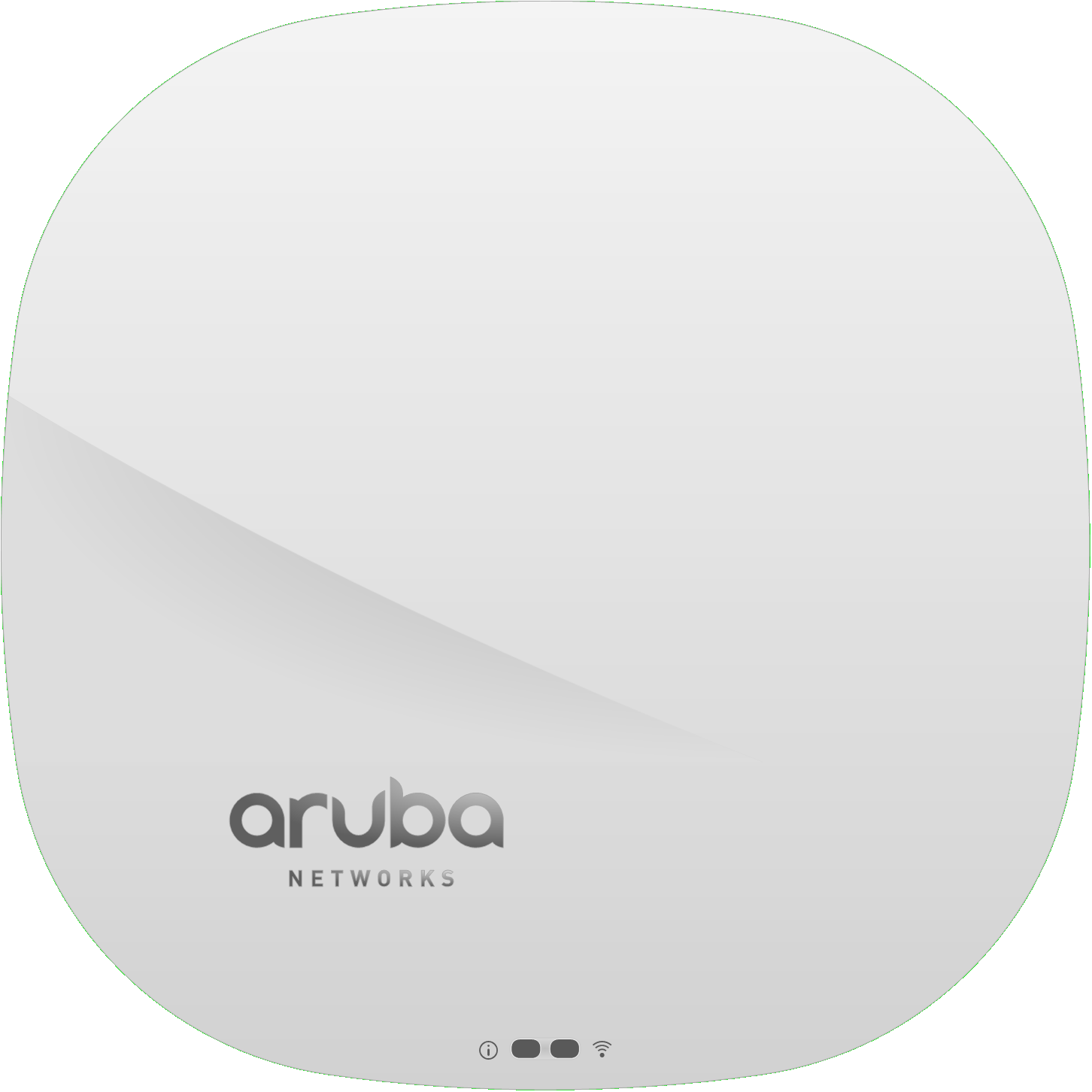
Aruba AP-535
★ 3.5 Value Score
Technical Specifications
- Wi-Fi Standard: IEEE 802.11ax (Wi-Fi 6), Wi-Fi CERTIFIED ax
- Spatial Streams (MIMO): 4x4:4 on 2.4 GHz and 4x4:4 on 5 GHz
- Aggregate Throughput: 3.55 Gbps combined (up to 2.4 Gbps on 5 GHz, up to 1.15 Gbps on 2.4 GHz)
- Radios (bands): Dual radio: 2.4 GHz and 5 GHz; up to 16 BSSIDs per radio
- Uplink Port Speed: 2x RJ-45 HPE SmartRate ports (E0, E1), 100M/1G/2.5G/5G negotiated, 5 Gbps max
- Max Clients: Up to 1,024 associated clients per radio
- PoE Requirement: 802.3at (PoE+) or 802.3bt; dual-port PoE can be combined. Max draw 23.3 W (802.3at) to 26.4 W (802.3bt), varies by source
- Antennas: Internal (4 antennas); external-antenna sibling is AP-534
- Dimensions: 240 x 240 x 57 mm, approx. 1.27 kg without mount bracket
- Ports (other): 1x USB 2.0
- Management: Aruba Central / AOS-10 and Mobility Conductor (cloud or on-premises)
Curation Review
- ✔ Pros: Wi-Fi 6 (802.11ax) dual-band 4x4 radios with high per-client capacity; 3.55 Gbps aggregate throughput; 1,024 clients per radio suits high-density deployments; 2.5G/5G multi-gig uplink ports support modern wired backhaul; flexible 802.3at/bt PoE with dual-port power combining; internal antennas suit standard indoor ceiling installs; Wi-Fi CERTIFIED ax interoperability
- ✘ Cons: Power draw can exceed 802.3at budget (up to 26.4 W), so 802.3bt or power combining may be needed; aggregate throughput and power figures differ between sources, so verify on HPE's official datasheet; internal-antenna model is less flexible than the AP-534 external-antenna version; price is high relative to Wi-Fi 6E and Wi-Fi 7 alternatives; no Wi-Fi 6E 6 GHz radio, so it is limited to 2.4/5 GHz
- Est. Price: $1,500 - $2,028
Compare Against
Choose another ap to compare.