Primary Device
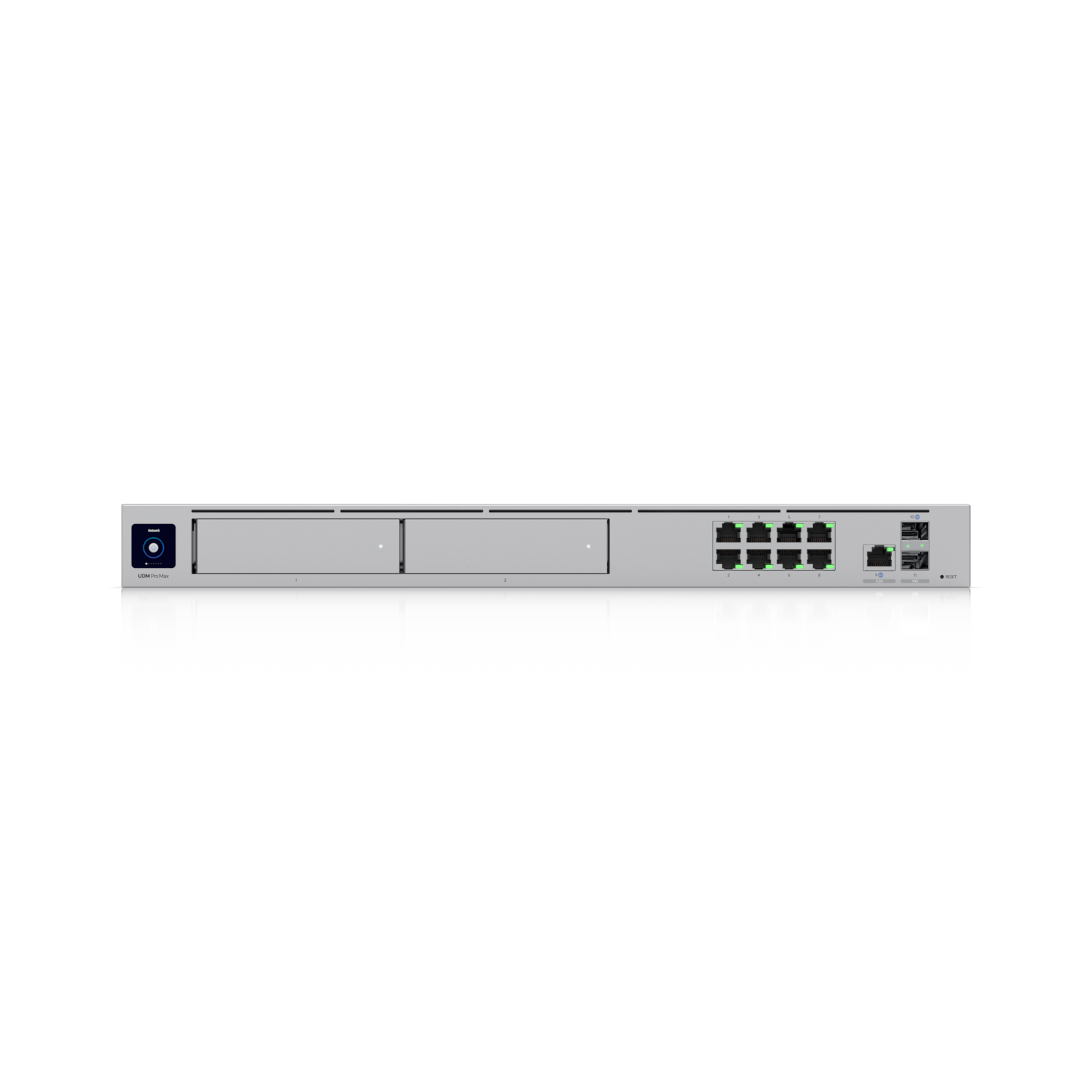
Ubiquiti UniFi Dream Machine Beast
★ 4.7 Value Score
Technical Specifications
- Firewall Throughput: Not published by Ubiquiti
- Threat Prevention Throughput: 25 Gbps IDS/IPS
- IPsec VPN Throughput: Not published by Ubiquiti
- Max Sessions: Not published by Ubiquiti
- New Sessions/sec: Not published by Ubiquiti
- Interfaces: 2x 1GbE RJ45; 8x 10GbE RJ45 (10G/5G/2.5G/1G/100M); 2x 10G SFP+; 2x 25G SFP28 (25G/10G/1G); 1x console
- Form Factor: 1U rackmount cloud gateway
Curation Review
- ✔ Pros: 25 Gbps IDS/IPS throughput with 55,000+ CyberSecure signatures; 8x 10GbE RJ45 plus 2x 25G SFP28 and 2x 10G SFP+ for high-speed uplinks and backbone links; Supports 750+ managed UniFi devices and 7,500+ connected clients; 8-core ARM Neoverse N2 CPU at 2.1 GHz with 16 GB RAM; Integrated 128 GB SSD and two 3.5" NVR HDD bays for UniFi Protect; Shadow Mode (VRRP) high availability, gateway failover, and DC power backup input; Supports IPsec, OpenVPN, WireGuard, L2TP and Site Magic SD-WAN
- ✘ Cons: Priced at roughly three times the UDM Pro Max ($1,499 vs $599); No PoE ports; Internal power supply is not removable; Firewall, IPsec VPN, max session, and new-session-rate figures are not published by Ubiquiti; Overkill for small deployments where the UDM Pro Max would suffice; Third-party listings reach $1,999.99 above the reported $1,499 price; Protocol support differs between sources (Teleport and L2TP are not listed everywhere)
- Est. Price: $1,499 - $2,000
Compare Against

Ubiquiti Cloud Gateway Max
★ 4.9 Value Score
Technical Specifications
- Firewall Throughput: 2.5 Gbps (routing, IDS/IPS off)
- Threat Prevention Throughput: 1.5 Gbps (IDS/IPS on)
- IPsec VPN Throughput: Not published by Ubiquiti; WireGuard/Site-Magic VPN up to 500 Mbps (third-party review, untested method)
- Max Sessions: Not published
- New Sessions/sec: Not published
- Interfaces: 5x 2.5GbE RJ45 (1 WAN + 4 LAN, one LAN port can be remapped to a second WAN)
- Form Factor: Compact desktop, 142 x 127 x 30 mm, USB-C 5V/5A power (max 16.1 W)
Curation Review
- ✔ Pros: 2.5GbE WAN and LAN ports on a compact, low-power chassis (max 16.1 W); 512GB built-in NVMe storage on the standard SKU for local UniFi data; Integrated UniFi controller with IDS/IPS and no license or subscription fees; Supports 300+ clients and 30+ UniFi devices; Multi-WAN capable through the remappable LAN port
- ✘ Cons: Only 1.5 Gbps with IDS/IPS enabled, well below the 2.5 Gbps routing figure; IPsec VPN throughput, session counts and new sessions per second are not published; No PoE output and no built-in Wi-Fi access point; No LAG/LACP support; 500 Mbps VPN throughput is limiting for high-volume site-to-site tunnels
- Est. Price: $240 - $279
Popular Comparisons
Ubiquiti UniFi Dream Machine Beast vs Ubiquiti UniFi Cloud Gateway Fiber
Ubiquiti UniFi Dream Machine Beast vs Ubiquiti UniFi Dream Machine Pro Max
Ubiquiti UniFi Dream Machine Beast vs Ubiquiti Cloud Gateway Max
Ubiquiti UniFi Dream Machine Beast vs Ubiquiti UniFi Cloud Gateway Max (UCG-Max)
Ubiquiti UniFi Dream Machine Beast vs Ubiquiti Enterprise Fortress Gateway (EFG)