Primary Device
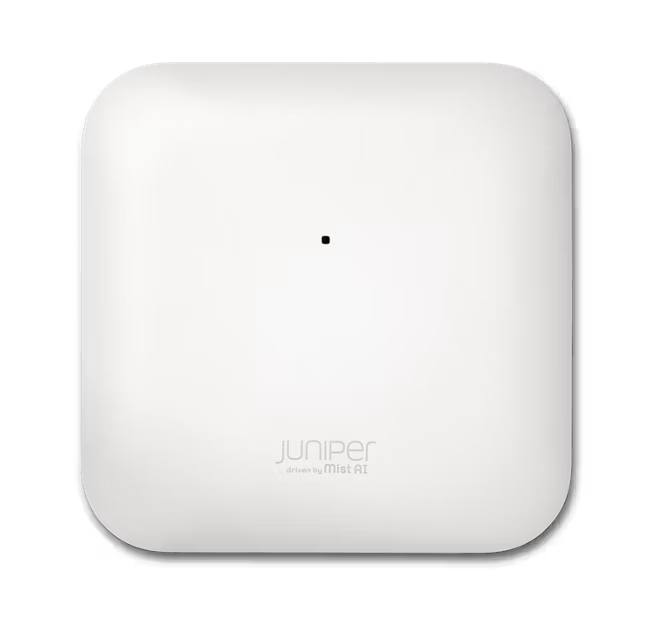
Juniper Networks Mist AP33
★ 3.4 Value Score
Technical Specifications
- Wi-Fi Standard: WiFi 6 (802.11ax)
- Spatial Streams (MIMO): 4x4 MIMO (2.4 GHz and 5 GHz)
- Aggregate Throughput: 2.4 Gbps
- Radios: Dual-band (2.4 GHz, 5 GHz)
- Uplink Port Speed: 2.5 Gbps (RJ45)
- Max Clients: 256 concurrent
- PoE Requirement: 95W PoE+ (802.3at)
- Dimensions: 310 x 310 x 33 mm
- Antenna Type: Integrated dual-band antenna
- Security: WPA3, 802.1X, AES encryption
Curation Review
- ✔ Pros: Dual 2.5 Gbps uplink for high-bandwidth aggregation; Excellent WiFi 6 coverage and performance in enterprise environments; Cloud-managed via Mist cloud for centralized visibility and analytics; Superior air quality scanning and interference detection; Supports high client density without performance degradation; OFDMA and MU-MIMO for improved throughput in congested networks
- ✘ Cons: Higher price point compared to WiFi 5 alternatives; Requires PoE+ infrastructure (95W) which older installations may lack; Mist cloud dependency for advanced features increases operational complexity; Limited backward compatibility optimization for older WiFi 4/5 devices; Dense feature set may be overkill for small/medium deployments; Potential learning curve for organizations new to Mist management platform
- Est. Price: $695 - $895
Compare Against
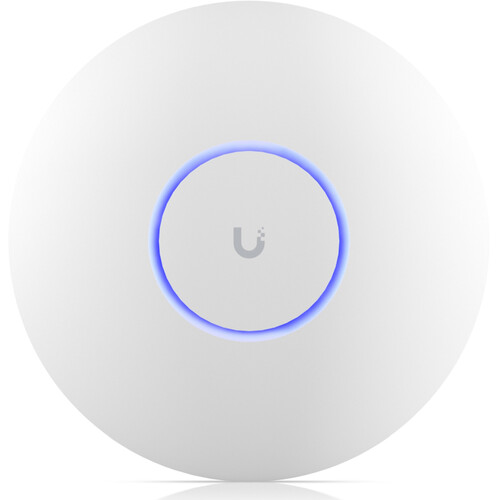
Ubiquiti UniFi U7 Pro
★ 4.6 Value Score
Technical Specifications
- Wi-Fi Standard: Wi-Fi 7 (802.11be)
- Aggregate Throughput: BE19000 (approximately 19 Gbps)
- 2.4 GHz Spatial Streams: 2x2 MIMO
- 5 GHz Spatial Streams: 4x4 MIMO
- 6 GHz Spatial Streams: 4x4 MIMO
- Radios: Tri-band (2.4 GHz, 5 GHz, 6 GHz)
- Uplink Port Speed: 10 GbE
- Max Clients: 300+
- PoE Requirement: PoE++ (95W)
Curation Review
- ✔ Pros: Wi-Fi 7 future-proofing with extremely high throughput; 10GbE uplink for backhaul capacity; Enterprise-grade build quality and management integration; Excellent performance in dense deployments; PoE powered for simplified installation
- ✘ Cons: Premium pricing significantly higher than Wi-Fi 6E alternatives; Requires PoE++ power injection (standard PoE insufficient); Wi-Fi 7 client ecosystem still maturing with limited device adoption; Overkill for small/residential deployments; Generates notable heat requiring adequate ventilation
- Est. Price: $449 - $549