Primary Device
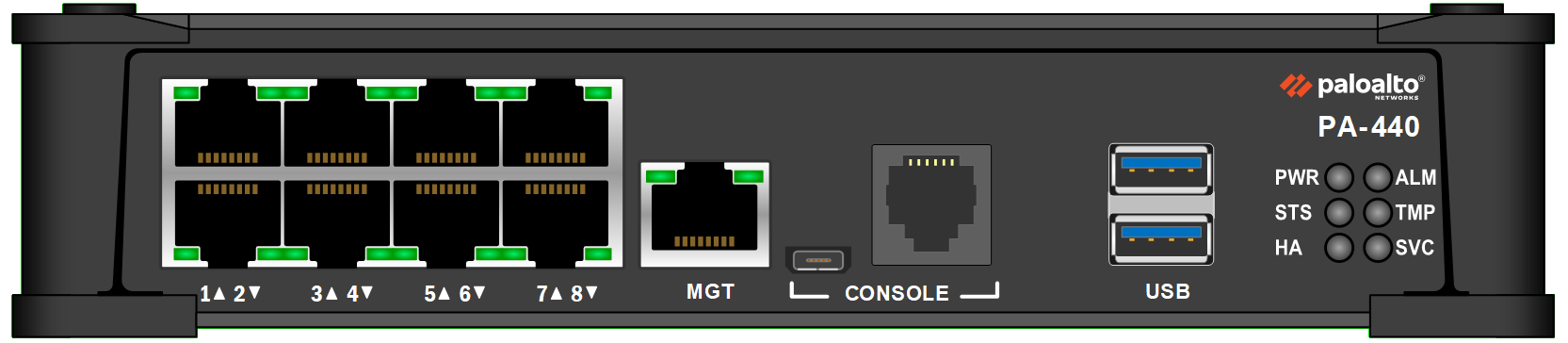
Palo Alto Networks ION 3200H-C5G-WW
★ 4.3 Value Score
Technical Specifications
- Device Type: 5G Cellular Gateway / SD-WAN Branch
- Cellular Connectivity: 5G NR (FR1), LTE, 3G fallback
- Broadband Interfaces: 2u00d7 Gigabit Ethernet (WAN)
- LAN Interfaces: 4u00d7 Gigabit Ethernet
- Management Port: 1u00d7 10/100 Ethernet
- Throughput (5G): Up to 1 Gbps (5G downlink dependent on carrier)
- Max Concurrent Sessions: 250,000+
- Form Factor: Desktop/Rack-mountable
- Dimensions: 430 u00d7 258 u00d7 44 mm
- Weight: ~2.3 kg
- Power Consumption: 90-150W
- PoE Support: No
- SD-WAN Features: Multi-WAN load balancing, failover, dynamic path selection
Curation Review
- ✔ Pros: Dual WAN with 5G cellular provides automatic failover; Native SD-WAN simplifies branch connectivity; Compact form factor suitable for small offices; Supports multiple carriers with fallback; Enterprise-class security and DPI capabilities
- ✘ Cons: Higher initial capital cost compared to traditional broadband-only gateways; 5G coverage varies by region and carrier; Requires separate cellular contract/SIM; Limited to Gigabit Ethernet speeds on wired interfaces; May require professional installation and configuration
- Est. Price: $4,500 - $6,500
Compare Against

Juniper Networks SRX4300
★ 3.3 Value Score
Technical Specifications
- Firewall Throughput: 500 Gbps
- Threat Prevention Throughput: 100-150 Gbps
- IPsec VPN Throughput: 50-75 Gbps
- Max Sessions: 4-8 million
- New Sessions/sec: 200,000-500,000
- Interfaces: Modular design with up to 24+ Gigabit Ethernet ports (configurable via line cards)
- Form Factor: 4-slot modular chassis, 3RU
Curation Review
- ✔ Pros: Exceptional modularity with hot-swappable line cards for capacity expansion; Enterprise-grade threat prevention with IPS, antivirus, and application security; High-performance IPsec VPN suitable for large branch deployments; Excellent integration with Juniper ecosystem (Contrail, Paragon, Sky Enterprise); Proven reliability with 99.99% uptime SLA; Advanced routing and security policies at line rate
- ✘ Cons: Significant capital expenditure ($120k-$250k+) limits adoption for mid-market; Complex management curve requires skilled Juniper JNCIA/JNCIS certification; High power consumption (2.5-3.5 kW) and cooling requirements; IPsec VPN throughput (50-75 Gbps) doesn't scale to full firewall throughput; Licensing costs can double TCO with threat prevention subscriptions; Proprietary spare parts and limited third-party support ecosystem
- Est. Price: $120,000 - $250,000
Popular Comparisons
Palo Alto Networks ION 3200H-C5G-WW vs Fortinet FortiGate 400G
Palo Alto Networks ION 3200H-C5G-WW vs Aruba (HPE) Aruba 9106 Gateway
Palo Alto Networks ION 3200H-C5G-WW vs Palo Alto Networks ION 3200
Palo Alto Networks ION 3200H-C5G-WW vs Ubiquiti Dream Machine Special Edition (UDM-SE)
Palo Alto Networks ION 3200H-C5G-WW vs Ubiquiti UniFi Dream Machine Pro Max